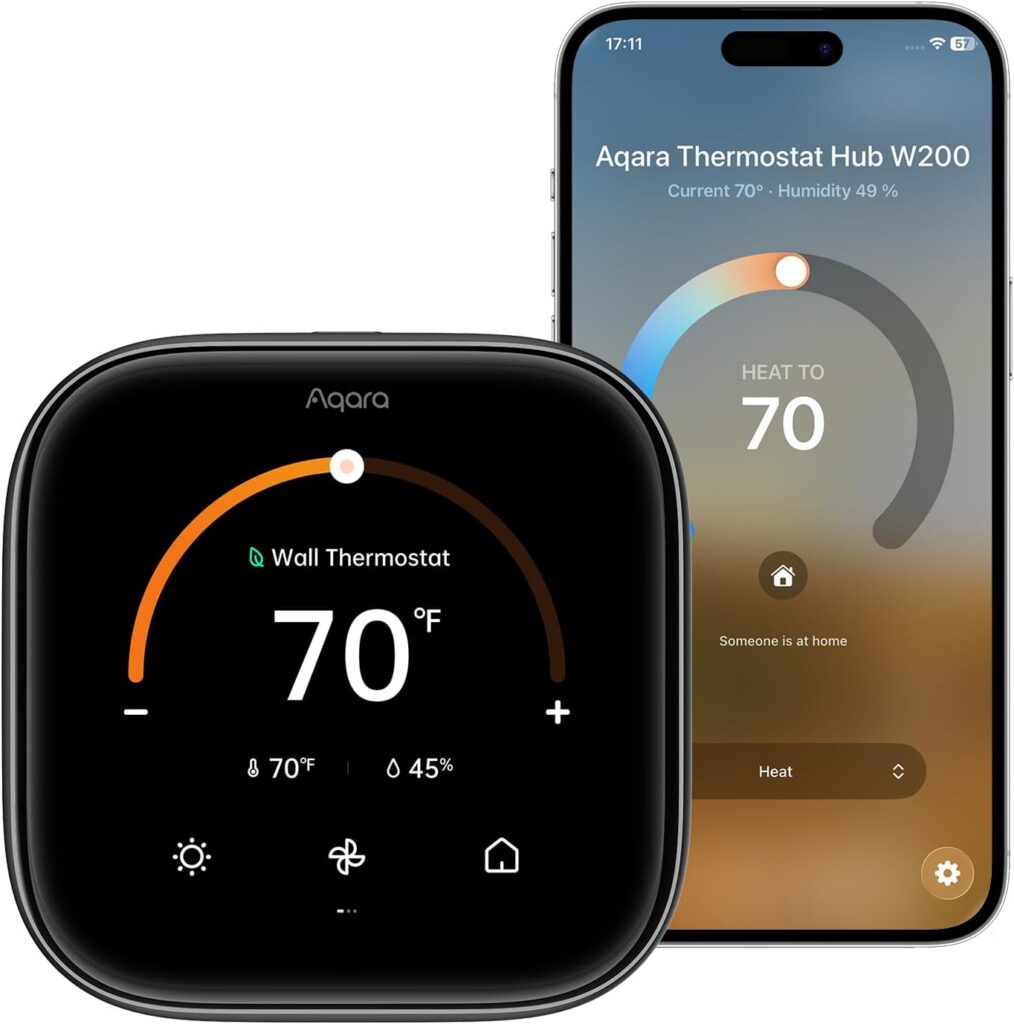
I’ve spent the better part of two decades managing IT infrastructure, which means I look at smart home gadgets the same way I look at servers: does it work reliably, does it play well with everything else, and will it still be worth owning in three years? Most “smart” thermostats fail at least one of those tests. They lock you into one ecosystem, they overpromise on savings, or they need a subscription just to function properly. So when I started testing the Aqara Smart Thermostat W200 with Apple Adaptive Temperature, I went in skeptical. I came out recommending it to friends who don’t know a router from a thermostat. Here’s why.
What the Aqara Smart Thermostat W200 Actually Does
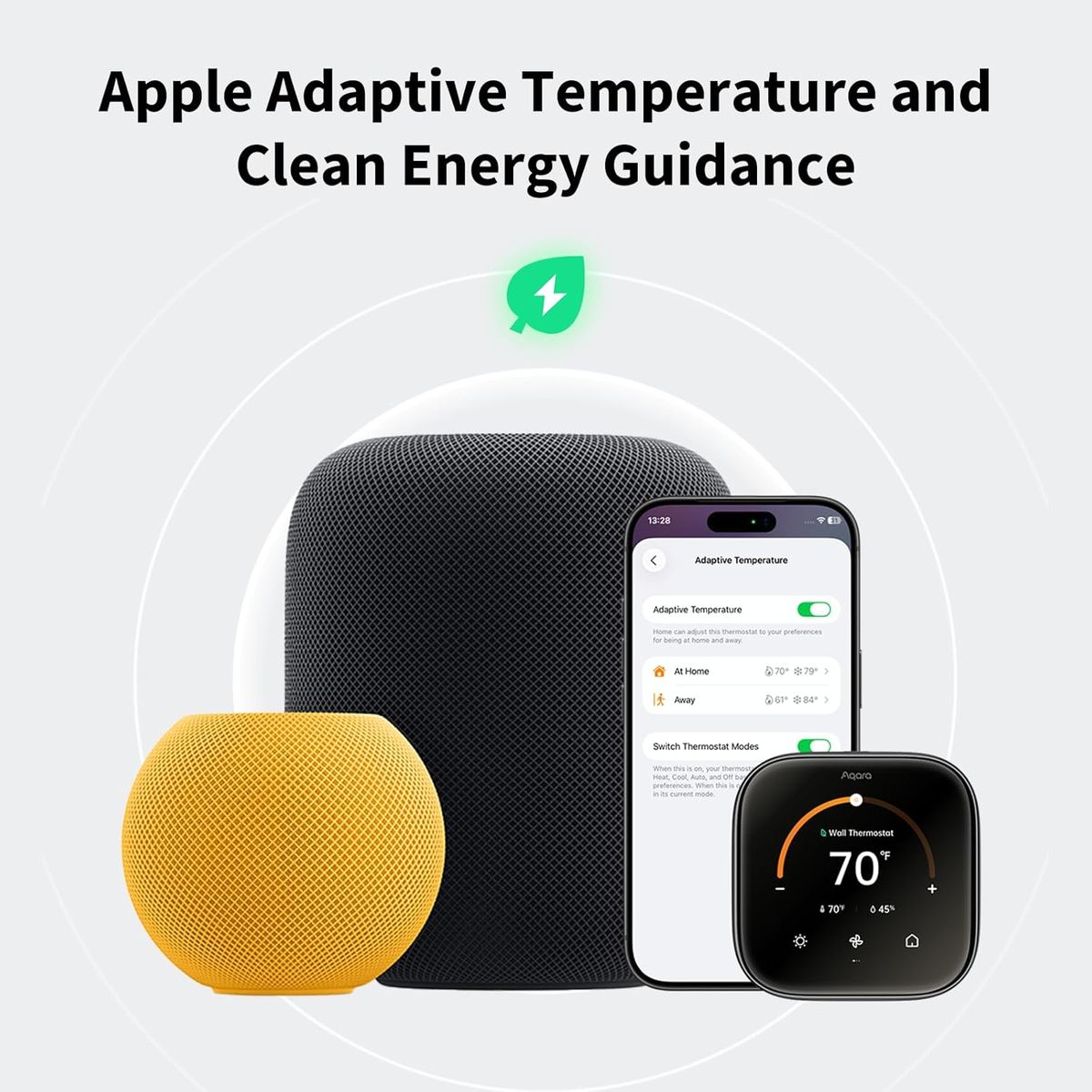
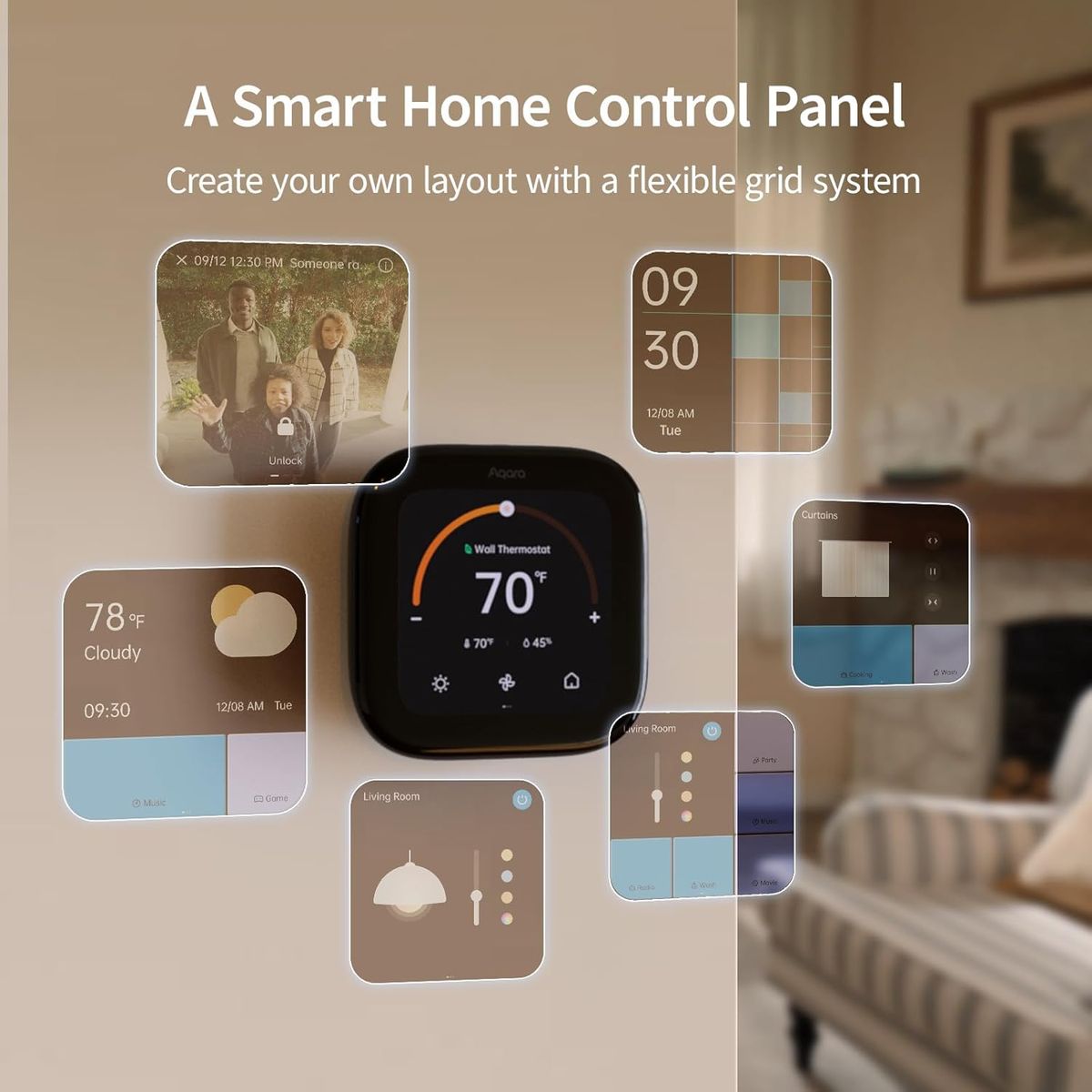
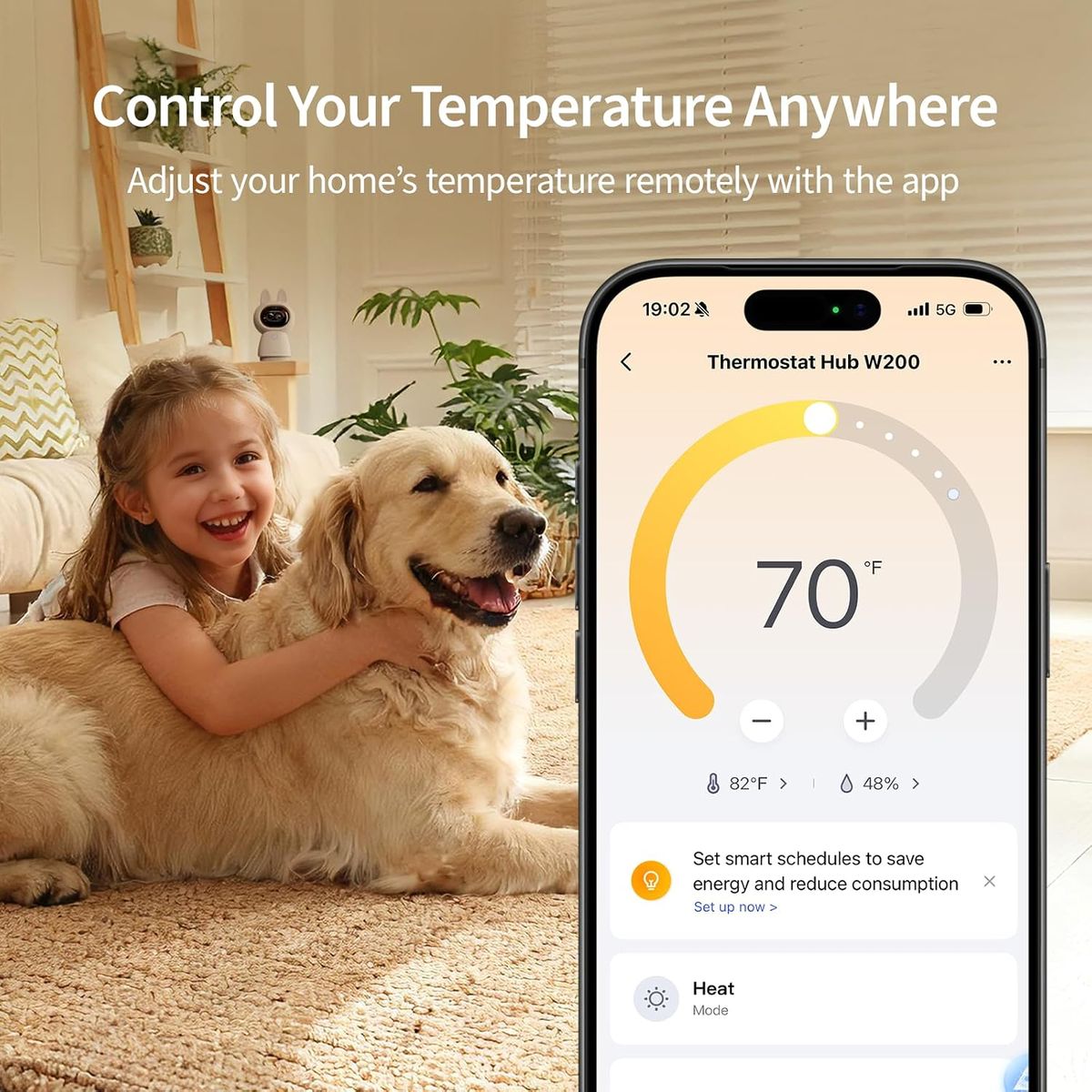
Strip away the marketing language and the W200 is a wall-mounted thermostat that learns your schedule and adjusts heating based on real conditions rather than a fixed timetable. The headline feature is Apple Adaptive Temperature, which uses Apple Home’s automation engine to modulate your heating intelligently instead of blasting it at full power until the room hits a target number.
That distinction matters more than it sounds. Traditional thermostats are binary: on or off. Adaptive systems ramp output up and down, which is how you actually cut energy waste. For anyone who has watched a heating bill climb every winter, that’s the whole ballgame.
Installation is standard for a thermostat replacement — you’re dealing with low-voltage wiring, not mains power, so it’s a DIY job for anyone comfortable with a screwdriver and a breaker switch. If you’re not, any handyman can do it in under an hour. The unit itself is clean and minimal, the kind of hardware that disappears into a wall rather than demanding attention.
Apple Home Integration: The Real Differentiator
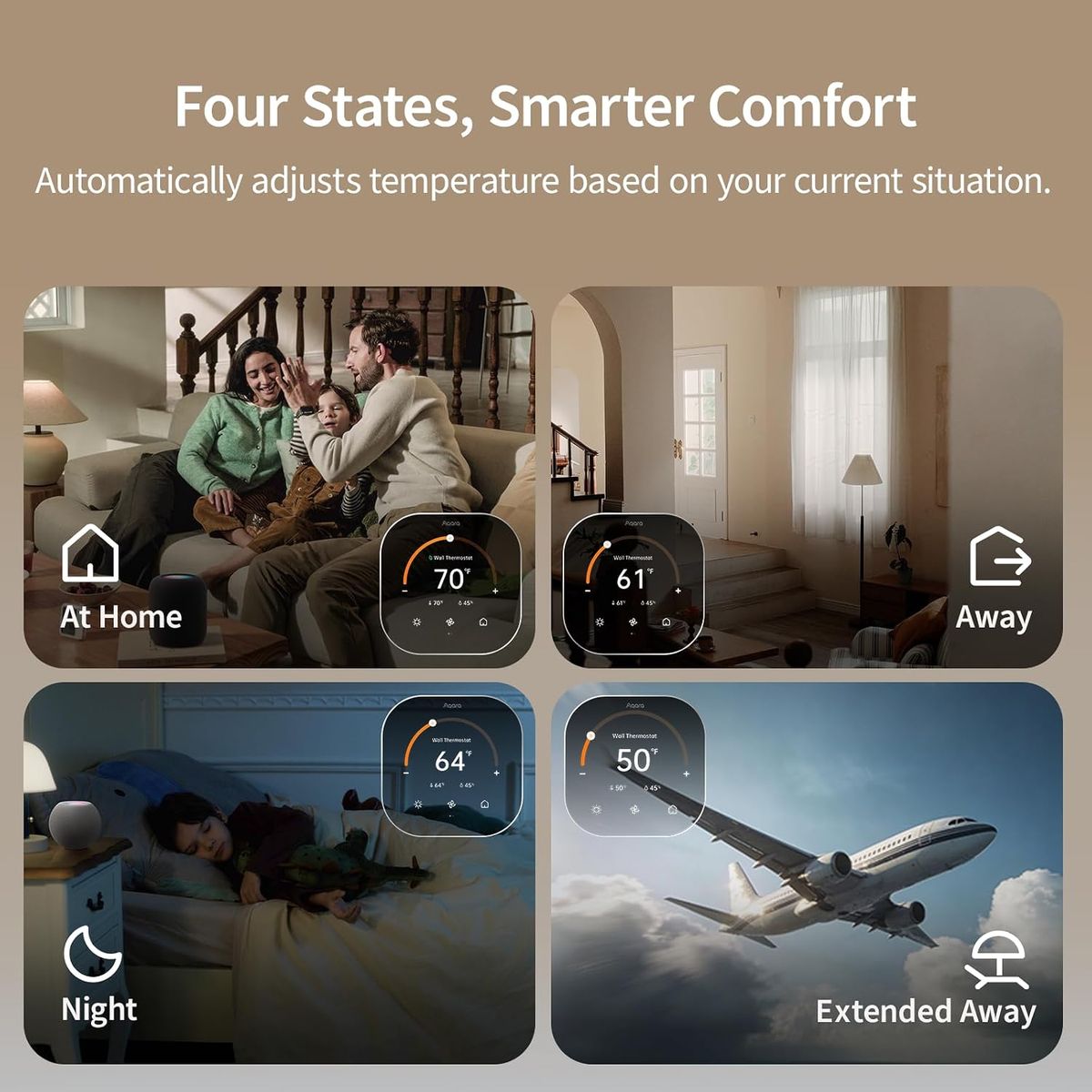
Here’s where I need to be blunt, because this is the part most buyers get wrong. The W200 is built around Apple Home. If you’re an iPhone household already using HomeKit for lights, locks, or cameras, this thermostat slots in seamlessly and becomes part of a coordinated system. Your heating responds to presence detection, time of day, and other automations you’ve already set up.
If you’re an Android household with no Apple devices, this is not the thermostat for you. That’s not a flaw — it’s a design decision, and it’s better to know it upfront than to buy it and discover it later. I’ve seen too many people purchase smart home gear based on spec sheets alone and end up frustrated.
For Apple users, though, the integration is genuinely tight. Adaptive Temperature isn’t a gimmick bolted on top; it’s the core logic of how the device operates. You set your comfort preferences, and the system handles the rest without you micromanaging schedules.
Compatibility Checklist Before You Buy
- Apple Home hub required: You’ll need a HomePod, HomePod mini, or Apple TV to unlock the adaptive features.
- Wiring: Standard low-voltage heating systems. Check your existing thermostat’s wiring before ordering.
- Ecosystem: Best experience is within Apple Home. Cross-platform use is limited.
- App: Setup runs through the Apple Home app, not a proprietary Aqara app — one less account to manage.
How It Compares to the Usual Suspects
Let’s do the comparison you’re probably already doing in your head. The big-name smart thermostats fall into two camps: those that charge subscription fees for advanced features, and those that don’t integrate deeply with any ecosystem.
The W200 sidesteps both problems. There’s no subscription required for the adaptive functionality — it runs through Apple Home, which you’re presumably already using if you own an iPhone. And unlike generic smart thermostats that treat ecosystem integration as an afterthought, this one was designed around it.
On build quality, the W200 holds its own against units costing noticeably more. The display is clear, the controls are responsive, and the mounting hardware feels solid rather than flimsy. I’ve opened enough cheap smart devices to tell the difference between cost-cutting and thoughtful engineering, and this leans toward the latter.
Where it loses points is flexibility. A thermostat that works with everything will always appeal to a broader audience than one optimized for a single ecosystem. But “works with everything” usually means “works well with nothing,” and I’d rather have one thing that works properly than five things that work adequately.
Energy Savings: What to Realistically Expect
I’m not going to quote a percentage, because anyone who does is guessing. What I can tell you is the mechanism: adaptive heating reduces the number of times your system runs at full blast, smooths out temperature swings, and avoids heating empty rooms when presence detection says nobody’s home.
Those three things compound. Over a heating season, the difference between a fixed schedule and an adaptive one is measurable on your utility bill — not dramatic, but real. If you’re already using HomeKit automations for lighting, adding the thermostat to that same logic costs you nothing extra in complexity and pays you back in efficiency.
For buyers comparing options on Amazon, the value proposition is straightforward: you’re paying for integration quality and reliability, not for a feature list you’ll never use.
Who Should Buy the Aqara Smart Thermostat W200
If you’re an Apple household replacing an aging thermostat, this is close to a no-brainer. The setup is clean, the integration is native, and there’s no ongoing cost. You install it once and forget about it, which is exactly what good infrastructure should do.
If you’re building out a HomeKit setup from scratch, this is a strong foundation piece. Heating and cooling are the highest-impact automations in any home, and getting them right early makes everything else easier.
If you’re on Android or running Alexa and Google Assistant exclusively, look elsewhere. Not because the W200 is bad, but because you’d be paying for capabilities you can’t use.
The Verdict
After years of watching smart home products overpromise, the Aqara Smart Thermostat W200 with Apple Adaptive Temperature does what it says. It integrates deeply with Apple Home, adapts heating intelligently, and avoids the subscription trap that plagues the category. It’s not for everyone — ecosystem lock-in is a real tradeoff — but for Apple households, it’s one of the more sensible purchases you can make this year.
Reliable hardware, honest functionality, no nonsense. That’s rarer than it should be.