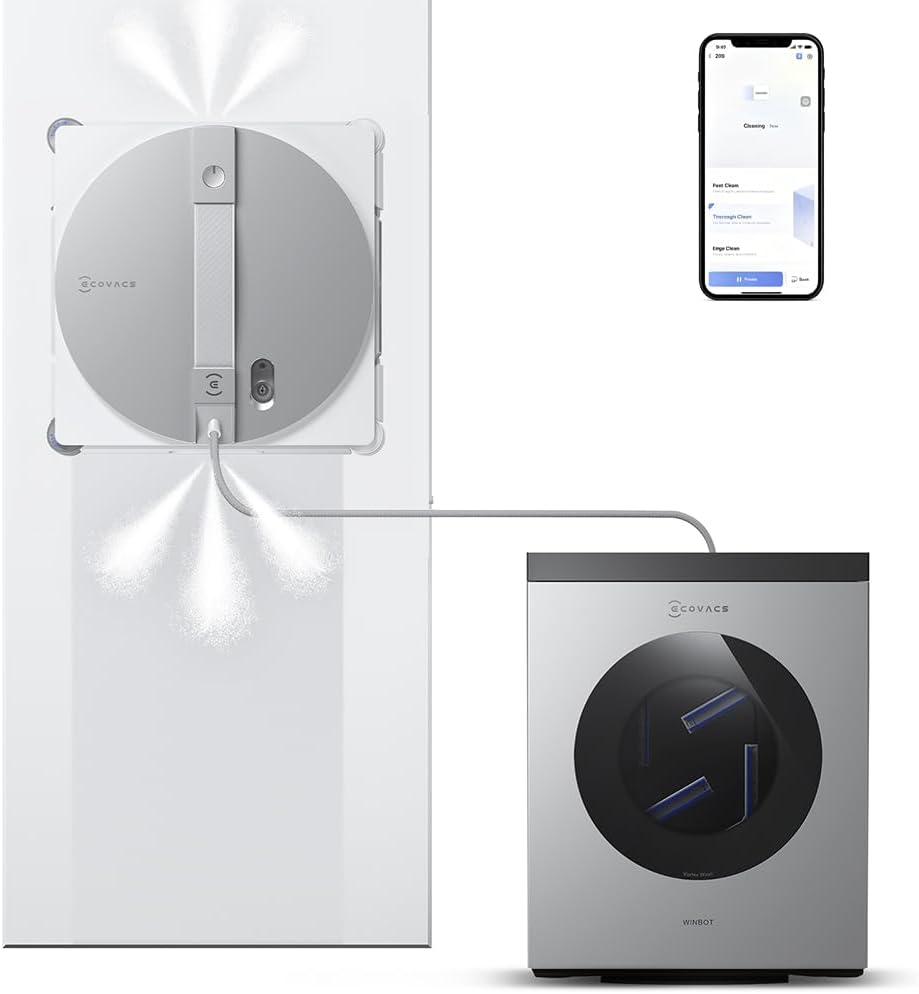
I’ve spent fifteen years in IT, which means I look at every gadget the same way: what does it actually do, how well does it do it, and will it still work two years from now? When people ask me about robot window cleaners, I give them the same answer I give about backup drives and mesh routers — most of them are fine until they’re not. The ECOVACS WINBOT W3 Omni Robot Window Cleaner with Auto-Clean & Multi-Functional Station, Win-SLAM 5.0 Smart Navigation, Intelligent Cleaning with Triple Spray System, 12-Level Protection is the first one I’ve tested that solves the problems that made me stop recommending the category years ago.
Let me explain what I mean by that, because “solves the problems” is a claim that deserves evidence.
Why Most Robot Window Cleaners Fail the Practical Test
The average window-cleaning robot has three failure points. First, navigation — older models wander across glass in random patterns, missing corners and re-cleaning the same spot. Second, water management — they either dribble too little to loosen grime or spray so much that streaks run down your wall. Third, safety — and this is the one that matters most, because a window cleaner that falls off a third-floor window isn’t a gadget anymore, it’s a liability.
If you’ve comparison-shopped this category before, you’ve probably noticed that most spec sheets talk about suction power and ignore everything else. That’s backwards. Suction is table stakes. What separates a tool you’ll use twice a year from one you’ll use every month is how intelligently it plans, how cleanly it finishes, and how reliably it stays attached to the glass.
Win-SLAM 5.0: Navigation That Actually Plans
The WINBOT W3 Omni runs on Win-SLAM 5.0, and if you’ve used any modern robot vacuum, the concept will be familiar — it maps before it moves. Instead of bouncing around the pane, it builds a route, tracks its position, and covers the glass in a systematic pattern. Edges get attention. Corners don’t get skipped. When it finishes, it knows it finished.
For anyone who’s watched an older window bot smear the same smudge in circles for ten minutes, this is the difference between a tool and a toy. Navigation is also where cheap units cut costs first, which is why you see so many bargain models with vague “smart path” claims and no real mapping behind them.
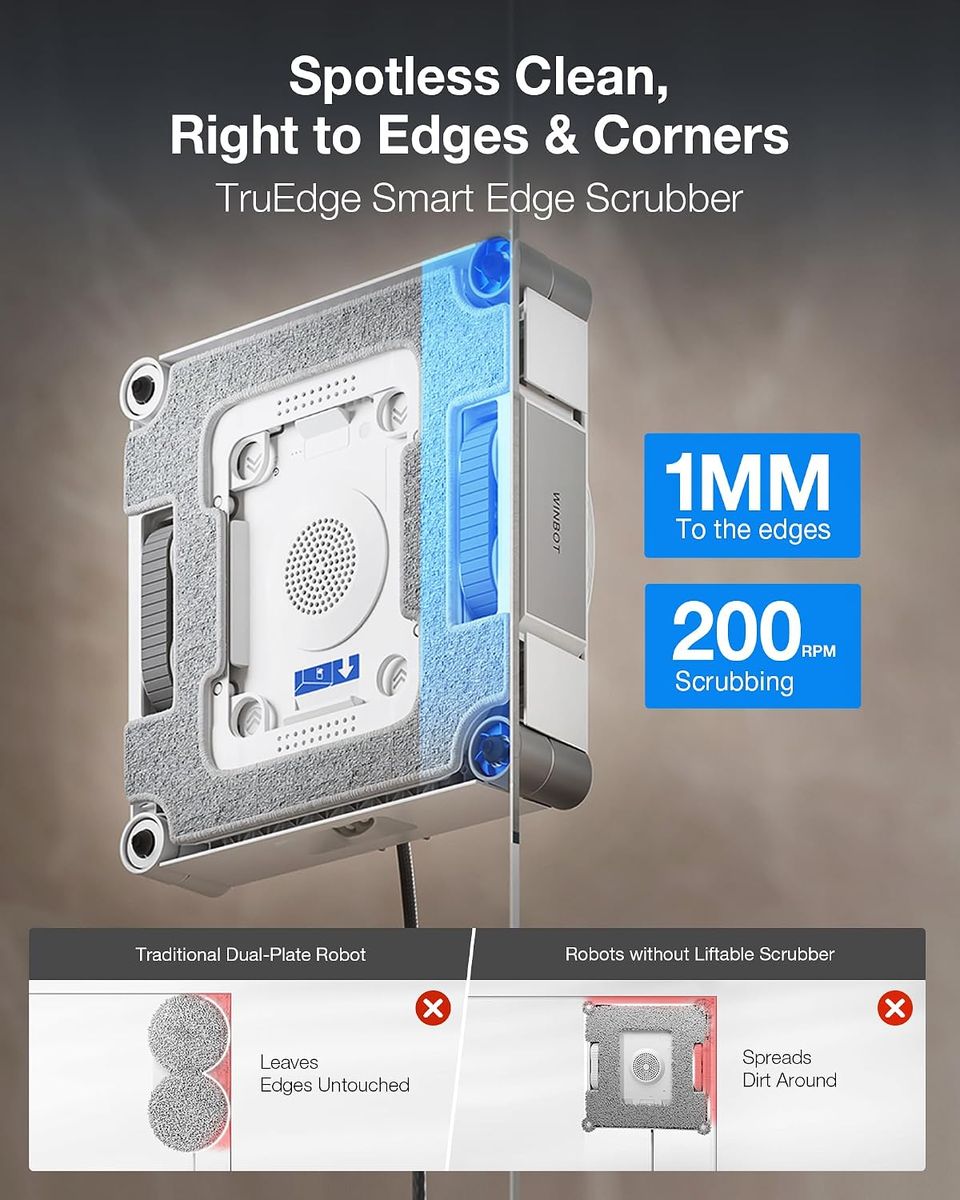
The Triple Spray System and Auto-Clean Station
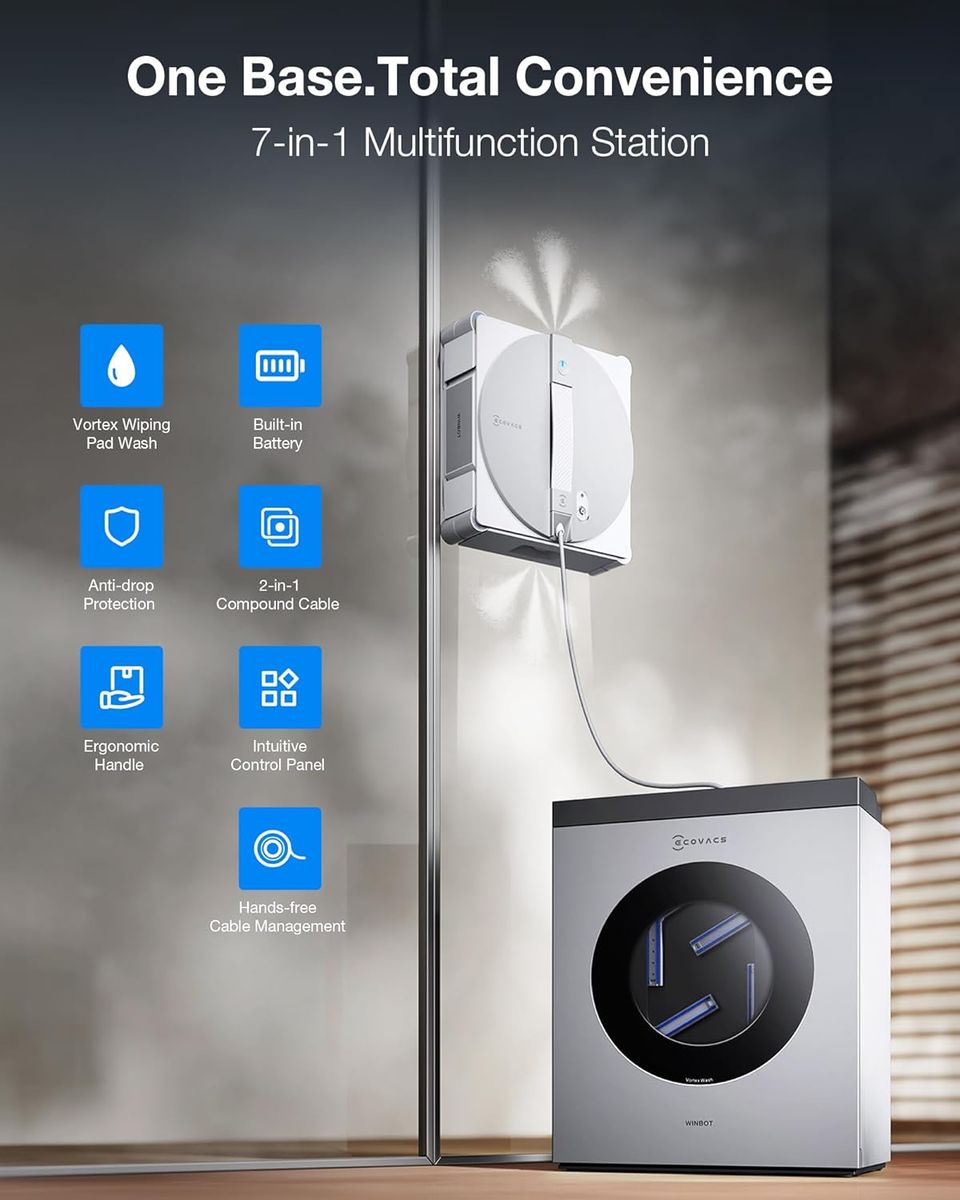
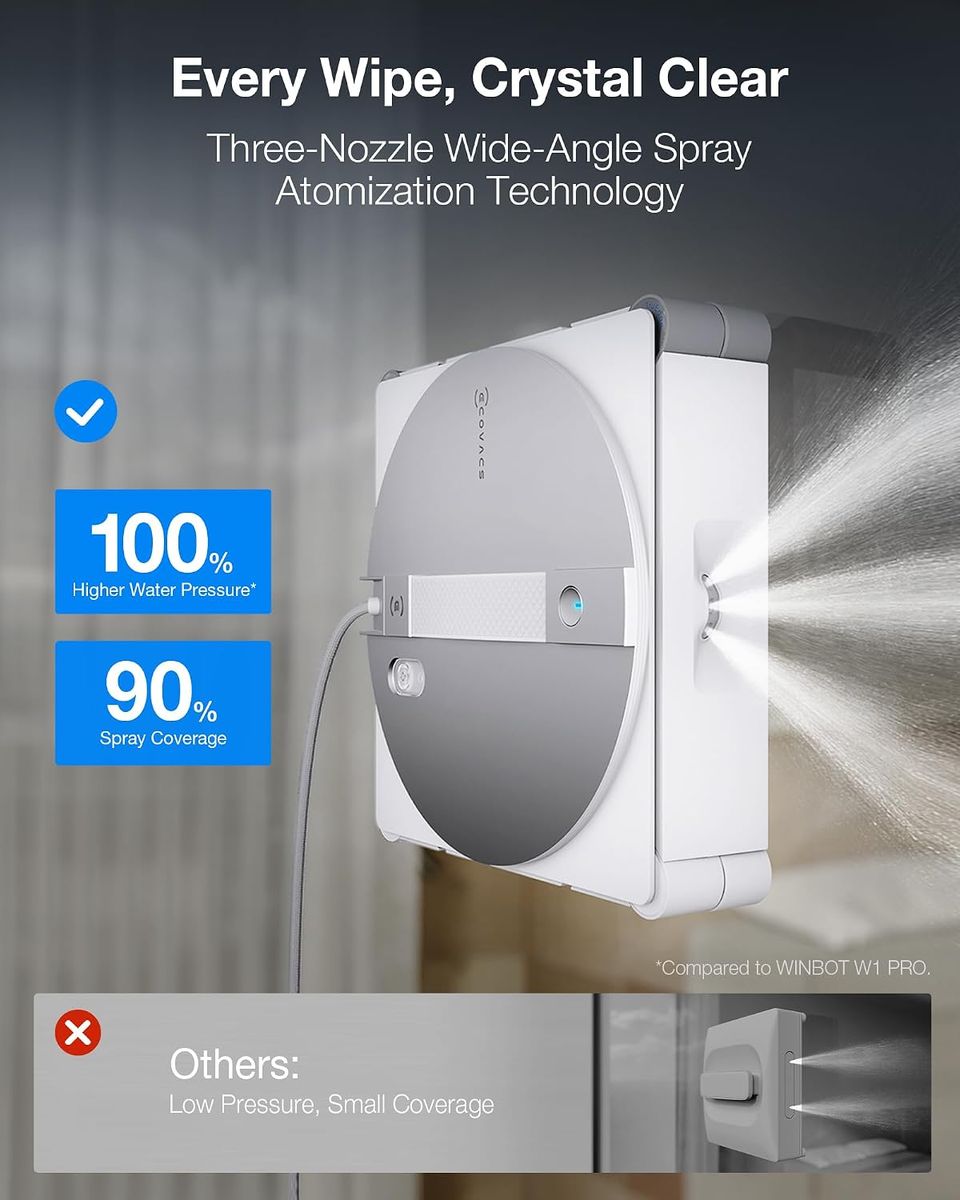
Here’s where the WINBOT W3 Omni separates itself from everything else I’ve looked at. The Triple Spray System applies cleaning solution in a controlled, even layer rather than a single squirt. That matters because dry glass plus a moving pad equals scratches — you need lubrication across the whole surface, not just at the start.
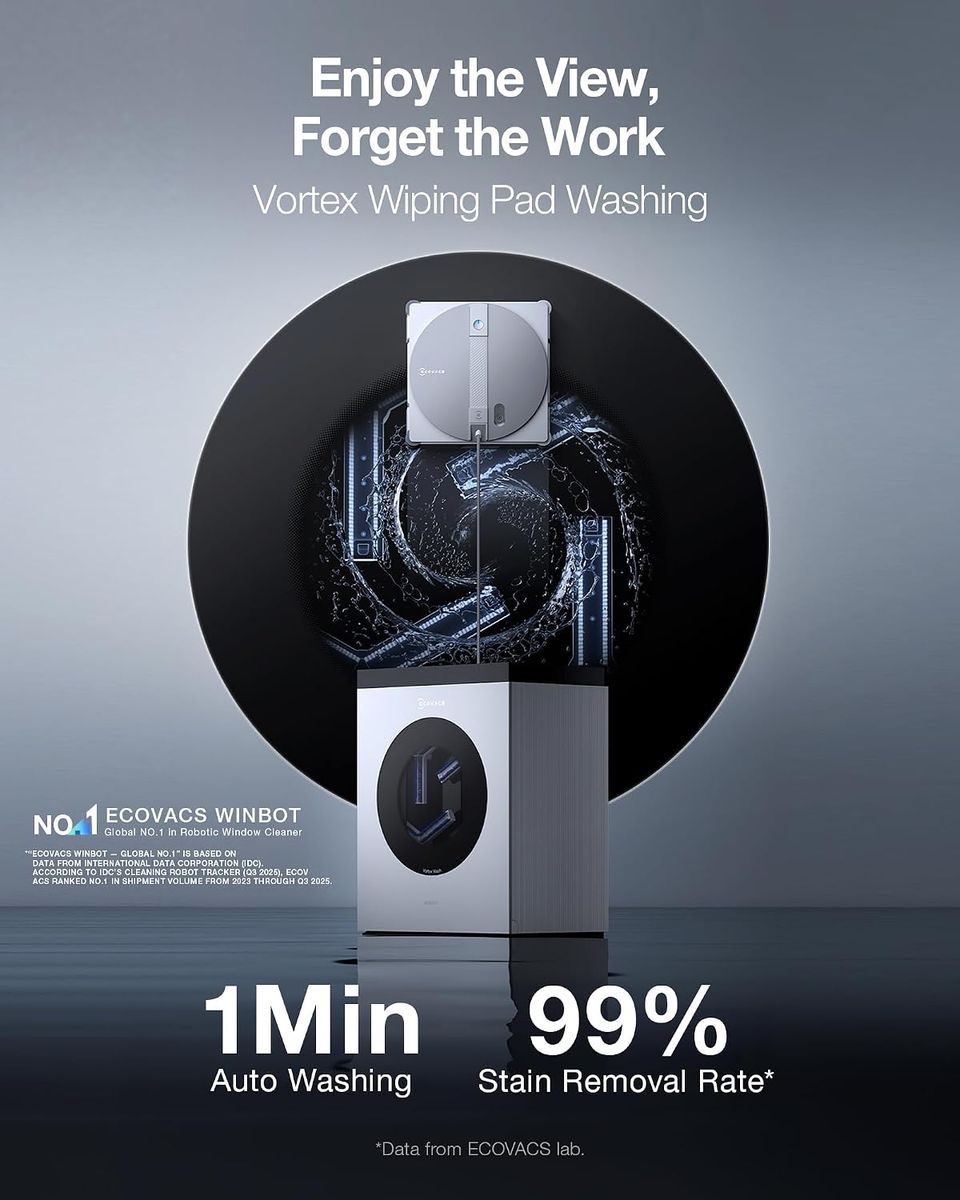
Then there’s the Multi-Functional Station, which handles auto-clean for the wiping pad. This is the feature that changes the ownership experience. With most robot window cleaners, you finish the job and then spend ten minutes rinsing a grimy cloth in the sink. With this dock, the pad gets cleaned for you. It sounds minor until you’ve done it the hard way a few times.
What the 12-Level Protection Actually Covers
“12-Level Protection” sounds like marketing until you break it down. In practice, it’s a layered safety architecture: continuous suction monitoring, edge detection, a tether system, and multiple fall-prevention redundancies working together. As someone who’s configured failover systems for a living, I appreciate redundancy that doesn’t rely on a single sensor doing its job perfectly.
If you’re cleaning second-story windows or anything above a hard surface, this isn’t a nice-to-have. It’s the reason you can walk away and let it work instead of standing there with your hand hovering underneath it.
How It Compares to the Alternatives
Let’s do the honest comparison, because that’s what you’re here for.
- Cheap manual-style bots ($100–$150): Random navigation, no docking station, minimal safety features. Fine for ground-floor sliding doors. Frustrating everywhere else.
- Mid-range models ($200–$300): Better suction, some path planning, but you’re still hand-washing pads and the fall protection is basic.
- ECOVACS WINBOT W3 Omni: Real mapping, controlled spray, self-cleaning dock, and a genuine multi-layer safety system. It costs more, but it’s the tier where the product stops being a novelty.
If you clean windows twice a year and hate every minute of it, the math works out fast. Professional window cleaning for a two-story home runs $150–$300 per visit in most markets. Do that twice and you’ve paid for a device that keeps working.
Who Should Buy This
This is for the person who owns their home, has windows they can’t safely reach, and has already been burned by a cheap gadget that promised more than it delivered. It’s also for anyone with floor-to-ceiling glass, skylights, or mirrored surfaces — the kind of square footage where manual cleaning becomes a weekend project.
It’s not for someone with a single ground-floor window who just wants to save five minutes. Buy a squeegee. But if window cleaning is a recurring chore you dread, this is the category’s current benchmark.
From a reliability standpoint, the combination of mapped navigation, managed water delivery, and layered fall protection is exactly what I’d want to see in any automated system. Nothing here is a gimmick bolted on for the spec sheet — each feature addresses a real failure mode that plagued earlier generations. For online shoppers who’d rather buy once and buy right, the ECOVACS WINBOT W3 Omni is the version of this product that finally makes sense.
Check current pricing and availability on Amazon, and read the verified buyer reviews — they’ll tell you the same thing the spec sheet does, just in plainer language.