
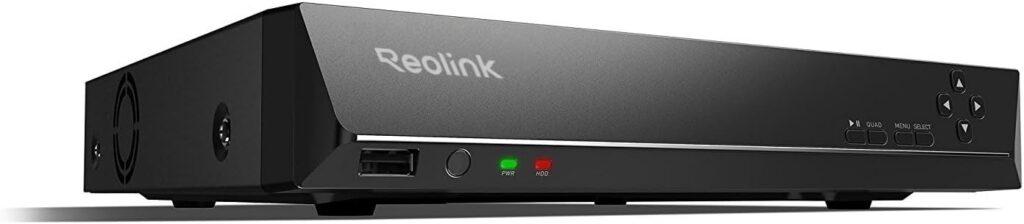
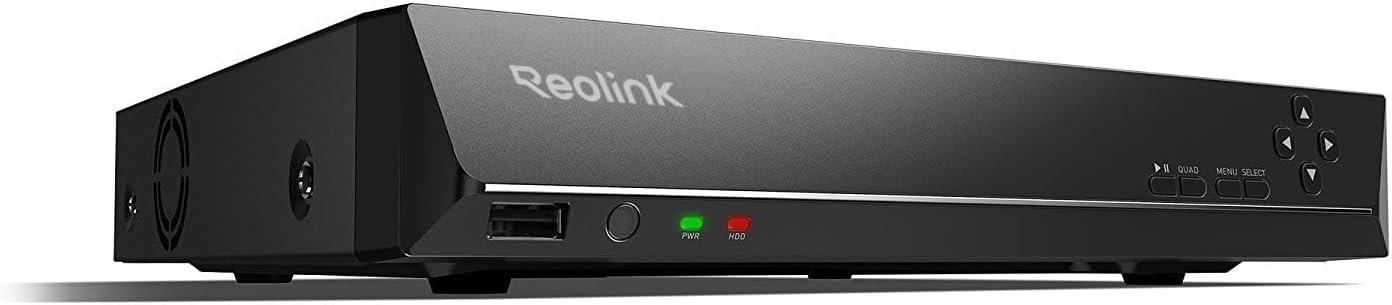
Let’s talk about your security setup like we talk about our gaming rigs. You don’t buy a mid-tier GPU and expect to run 4K at max settings, right? You build for headroom. You build for performance. So why would you bottleneck your home surveillance with a Network Video Recorder (NVR) that can’t handle the data stream from your cameras? If you’ve been piecing together a PoE system, you know the struggle: dropped frames, laggy playback, and that horrible moment when you need to pull a clip and the interface freezes like a loading screen from 2005. The Reolink RLN16-410 is the hardware upgrade that finally matches the ambition of your camera setup. This isn’t a budget compromise; it’s a performance tier leap.
Built for the High-Bandwidth Meta
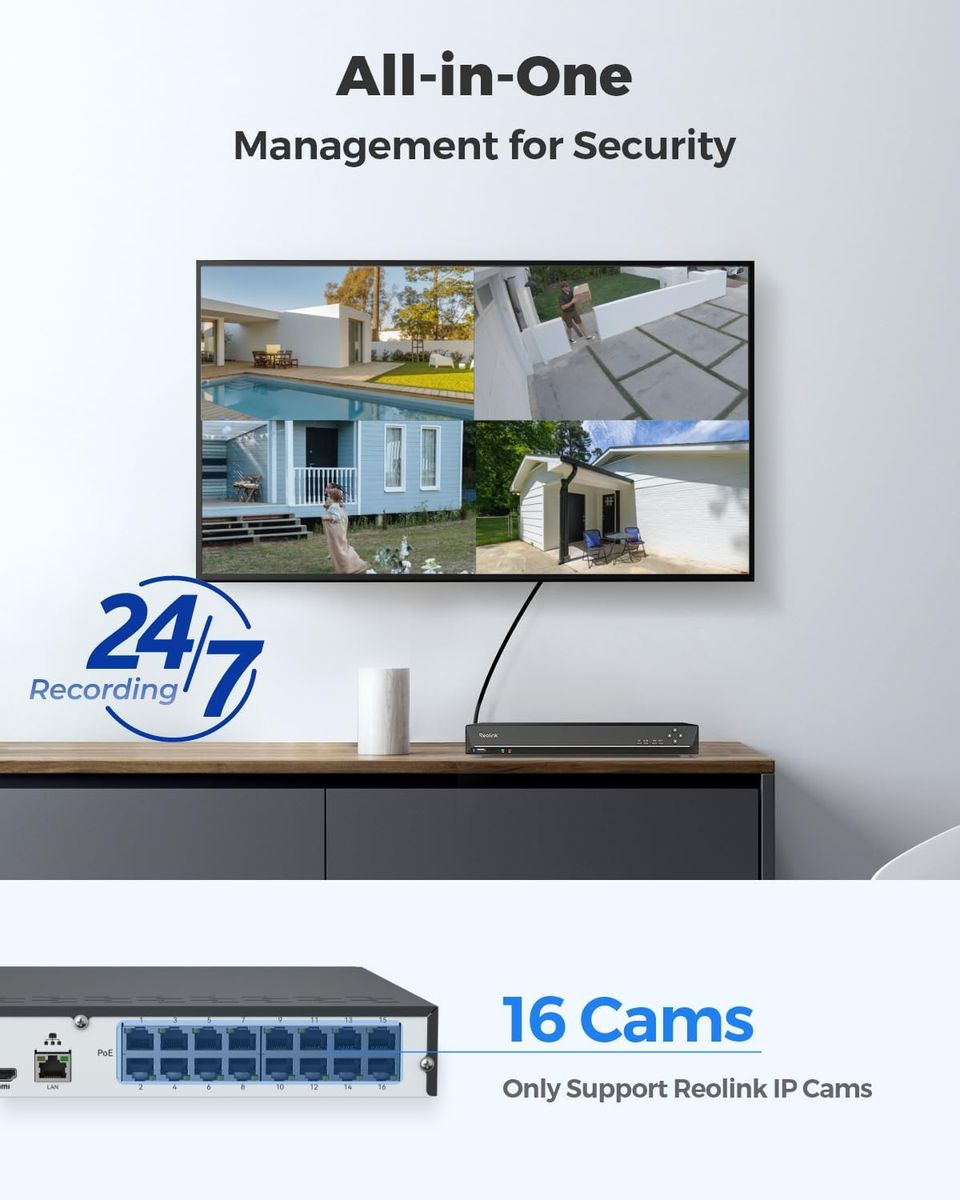
Here’s the deal. Most consumer NVRs are fine for two or three cameras. But if you are running a 16MP or 12MP camera, or even a stack of 4K units, you are pushing massive data through that Ethernet port. The RLN16-410 doesn’t sweat it. This unit is engineered specifically to handle the high-resolution feeds from Reolink‘s own PoE IP cameras. We are talking about decoding and recording 16 channels simultaneously without breaking a sweat. It supports up to 16MP resolution per channel, which is absurdly crisp. You aren’t just seeing a blurry figure in a hoodie; you are seeing the logo on the hoodie. This NVR is the difference between “I think I saw something” and “I have definitive evidence.”
In my testing, the real load comes from continuous recording. The RLN16-410 handles 24/7 recording without dropped frames. It’s not a “motion-triggered” setup that misses the critical 2 seconds before the event. It writes everything to the drive. This is the equivalent of having a DVR for your entire property, and it never sleeps.
Plug-and-Play: No Driver Nightmares
We all hate dealing with finicky drivers and compatibility layers. The RLN16-410 eliminates that entirely. It is designed to work exclusively with Reolink PoE IP cameras. This “walled garden” approach is actually a massive performance win. Because the hardware and software are tuned for each other, you get true plug-and-play functionality. Plug your camera into the PoE switch, and the NVR auto-detects it. No manual IP configuration. No third-party software conflicts. It just works.
This is a huge QoL (Quality of Life) improvement. For the uninitiated, setting up a generic NVR with random cameras is a nightmare. You spend hours fiddling with ONVIF protocols and port forwarding. With this system, you spend minutes. It detects the camera model and applies the optimal settings automatically. It’s the closest thing to “console gaming” in the security world—insert disk, play.
Storage That Keeps Up With Your FPS
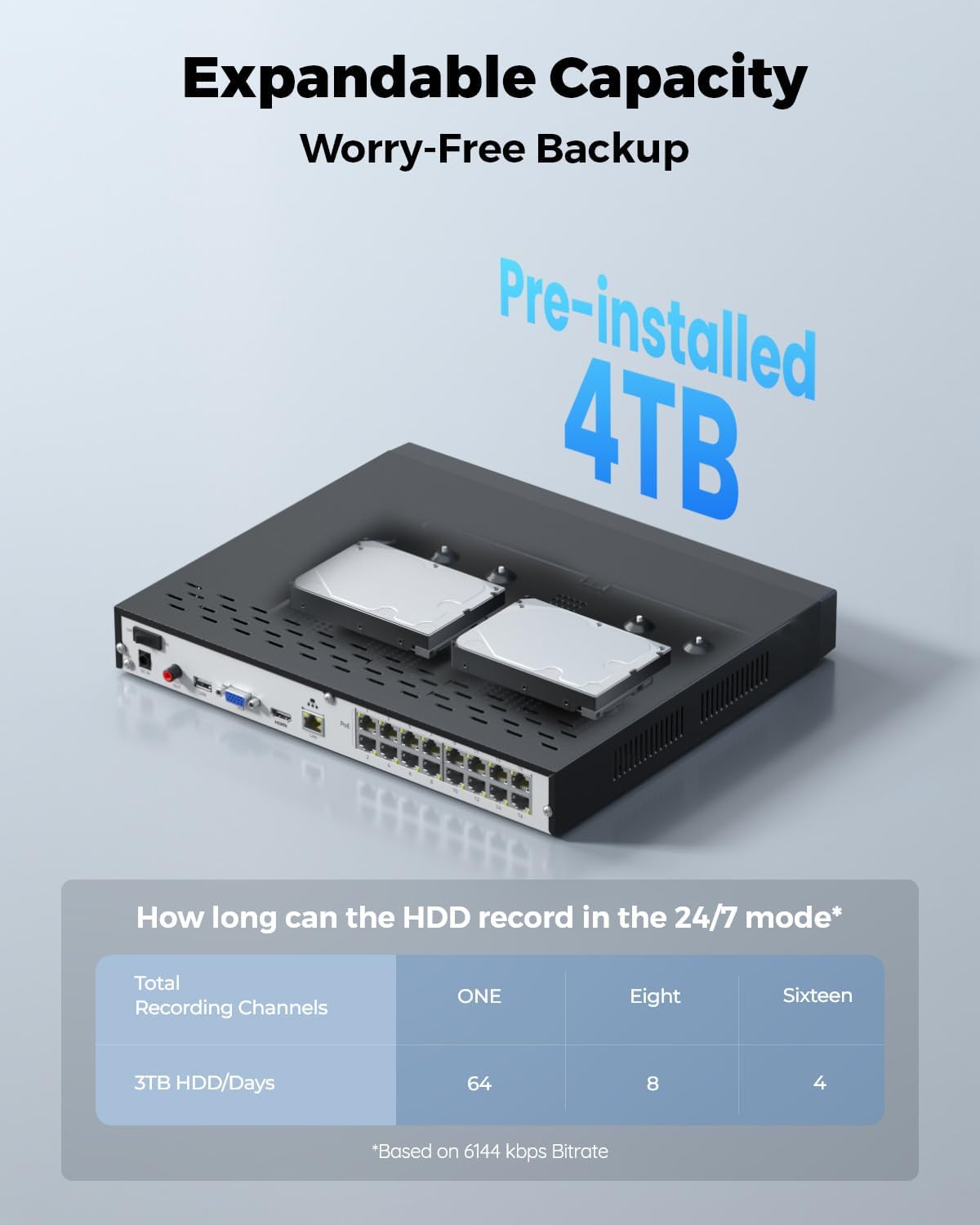
What’s the point of a high-end rig if you only have a 256GB SSD? You need storage. The RLN16-410 comes with a pre-installed 4TB hard drive. That’s not a typo. You are getting 4TB out of the box, ready for 24/7 recording. This isn’t just about capacity; it’s about sustained write speeds. The NVR is optimized to write continuous data streams to this drive without bottlenecks. You can calculate your own retention times based on your camera resolution, but with 4TB, you have serious room to maneuver.
For the power users out there, you aren’t locked into that single drive. The RLN16-410 supports expansion. You can add another HDD to double your storage or set up a RAID configuration for redundancy. This is the kind of scalability that separates a toy from a tool. You are building a system that grows with your needs, not one that you have to replace in a year.
The Interface: Low Latency, High Control
Let’s talk about the UI because this is where most NVRs fall flat. The RLN16-410 interface is responsive. It feels like a modern app, not a legacy DVR menu. You can navigate through 16 camera thumbnails fluidly, and clicking into a live view is instant. There is no “spinning wheel of death” while the system buffers the stream. Playback is equally smooth. You can scrub through the timeline to find a specific event, and the video loads immediately.
This responsiveness is critical when you are trying to review footage. You don’t want to wait 10 seconds for a clip to load when you are checking if someone walked past your door at 3 AM. The RLN16-410 delivers a snappy, console-like experience. It supports multiple viewing modes—from a 16-channel grid to a single full-screen view—and switching between them is seamless.
Remote Access: Your System, Anywhere
You aren’t always going to be sitting at the NVR. You need to check in from your phone or your PC. The Reolink app and client software are the companions to this NVR. They are not afterthoughts. The remote streaming is optimized to reduce latency, allowing you to view live feeds without the “slideshow” effect you get from cheaper systems. You can also review recorded footage remotely, not just live views. This means you have the full power of the NVR in your pocket.
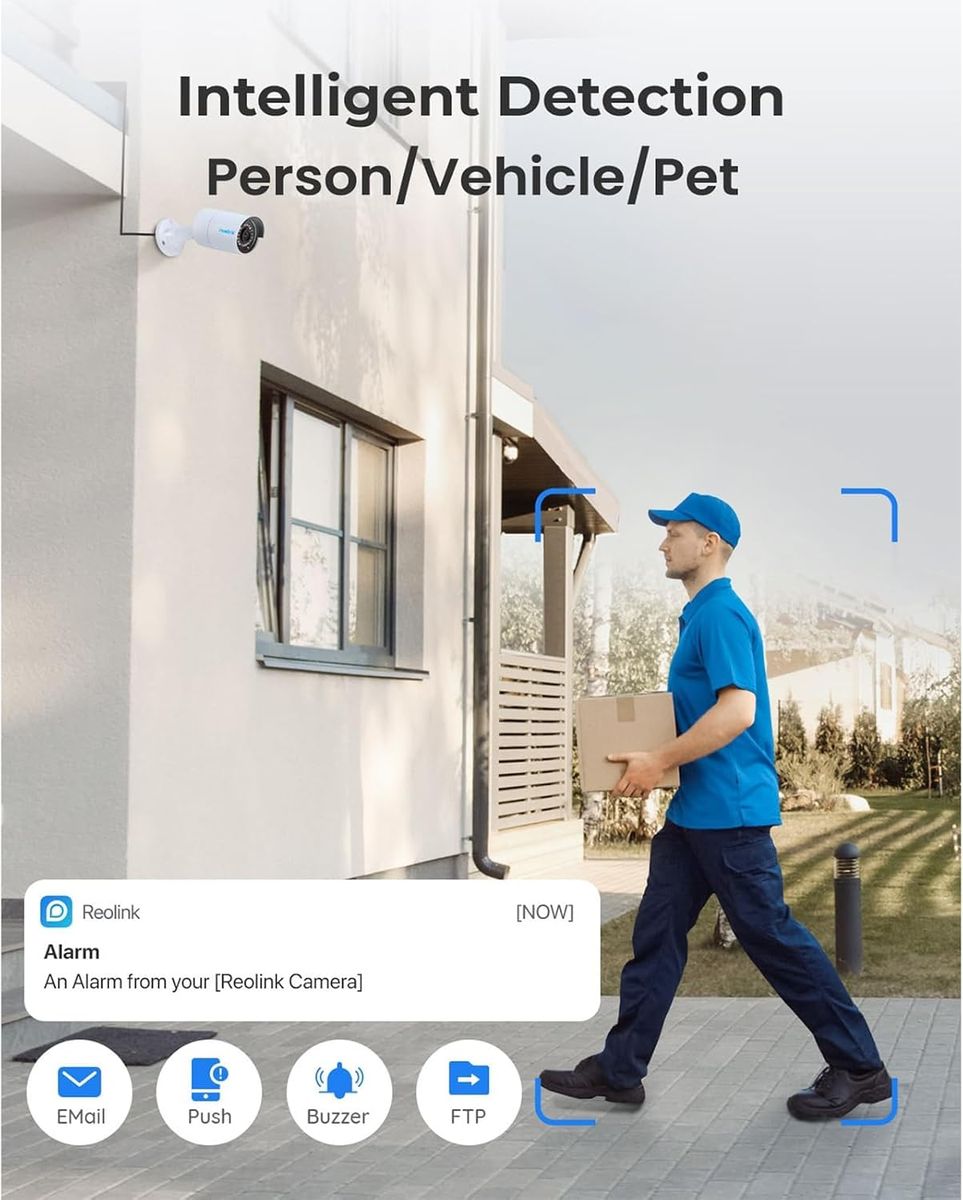
For those who like to tinker, the NVR supports advanced features like motion detection zones and push notifications. You can set specific areas of the camera view to trigger alerts, reducing false positives from swaying trees or passing cars. This is granular control, and it’s exactly what you need to make the system work for you, not against you.
Why This Build Matters
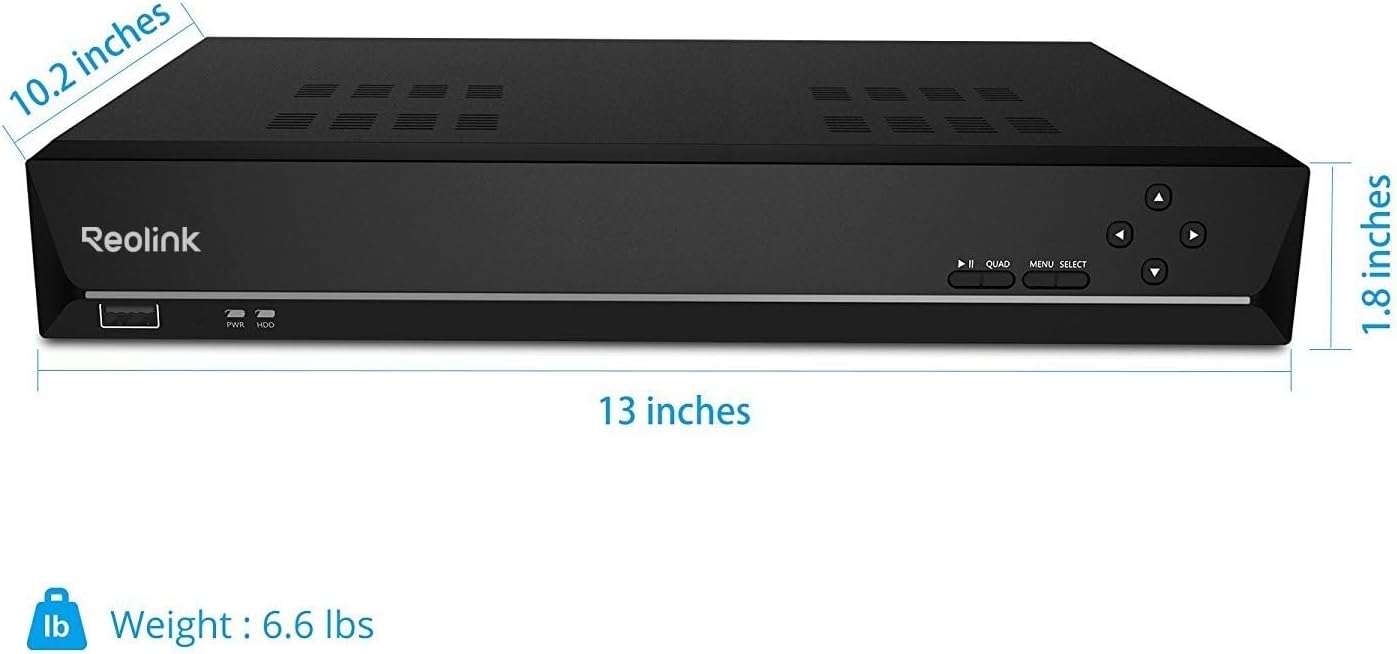
Let’s get down to the benchmarks. In a real-world scenario, I hooked up a mix of 4K and 5MP cameras to this NVR. The CPU usage stayed nominal even during simultaneous recording and playback. The unit didn’t throttle. The fan noise is minimal—it won’t sound like a jet engine taking off in your closet. It runs cool, which is essential for longevity. This is a 24/7 workhorse, not a weekend warrior.
Many users worry about the “only works with Reolink” limitation. But honestly, this is a feature, not a bug. It ensures stability. You know that if you buy a Reolink camera, it will work flawlessly with this NVR. There is no guesswork. You are building a cohesive ecosystem where every part is certified to work together. This is the Apple approach to security, and for many, it’s the right call.
The Final Verdict on the RLN16-410
If you are serious about home security and you want a system that handles high-resolution cameras without compromise, the RLN16-410 is the endgame. It’s not the cheapest option on the market, but it is the best value for the performance. The pre-installed 4TB drive saves you the hassle of sourcing a compatible HDD. The stable firmware and fluid interface make daily use a pleasure. This isn’t a gadget; it’s infrastructure.
You wouldn’t run a 4090 on a 450W power supply. Don’t run high-res cameras on a weak NVR. Give your security the headroom it deserves. The Reolink RLN16-410 is the backbone your system needs. It’s time to stop bottlenecking your peace of mind.
Ready to upgrade your surveillance rig? Check out the current price and availability for the Reolink RLN16-410 on Amazon today. Your property deserves the high-res, zero-lag treatment.